PVC-U pressure and sewerage
A reliable network starts at the joint
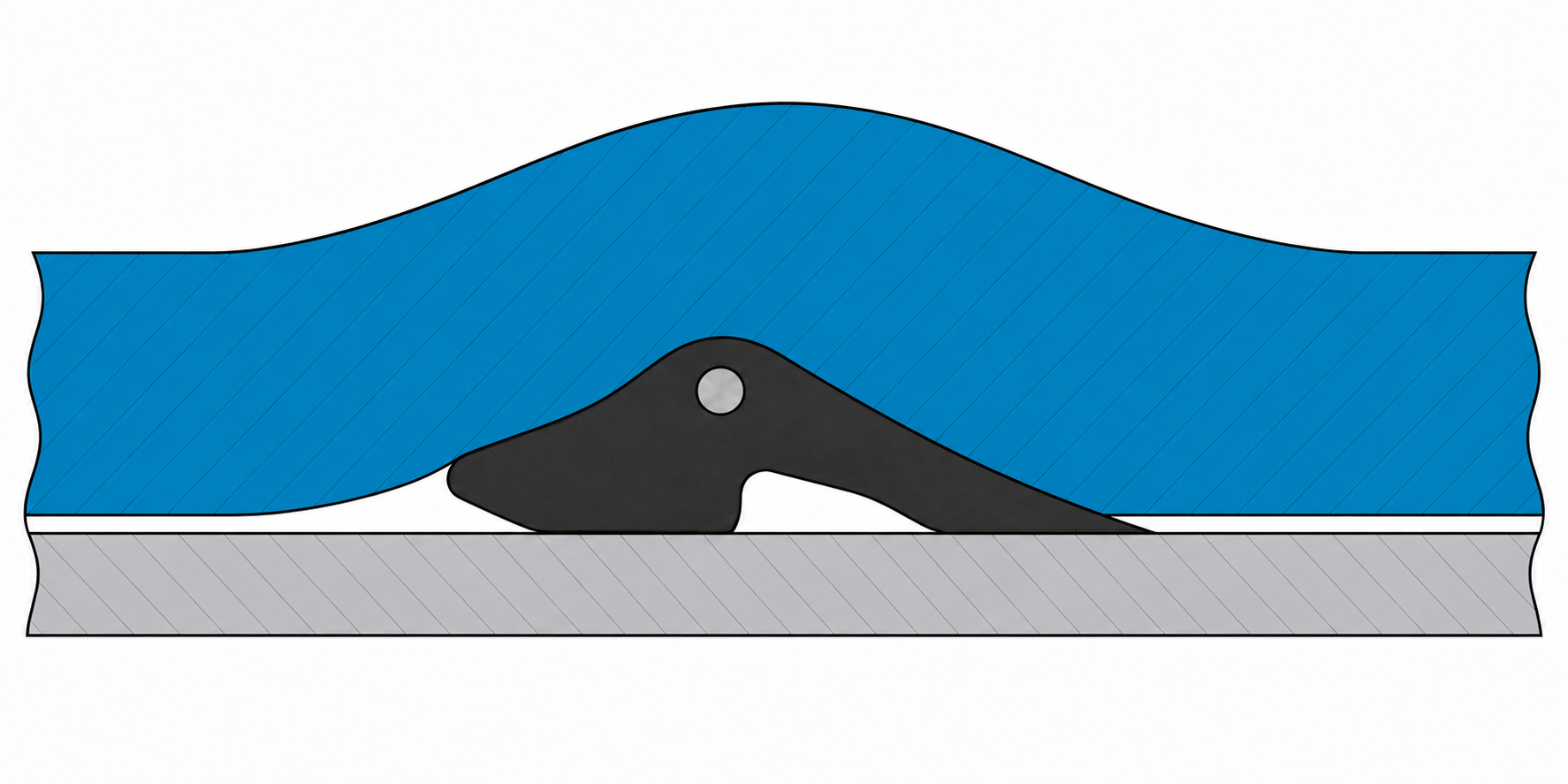
On our rubber-ring PVC-U pipe configurations, the sealing ring is integrated into the socket during manufacture. On site, the pipe is assembled by inserting the prepared spigot into this socket.
Integrated at the factory. Ready for assembly.
The ring is positioned during the socket-forming operation. Its integrated reinforcement holds it in the socket. Before release, the ring must be free from visible defects and correctly follow the socket profile.
- No separate ring to fit in the trench.
- Reduced risk of forgetting the ring or fitting it in the wrong position.
- The joint remains dependent on clean surfaces and correct insertion.
Two applications. A joint selected for each.
Gravity networks
Sewerage sealing rings
For wastewater and stormwater pipes. The ring seals the socket connection; the pipe stiffness class remains a separate selection criterion. Our range includes reinforced integrated rings and self-lubricating configurations, depending on the product supplied.
Joint diameters: 110, 125, 160, 200, 250, 315, 400, 500 and 630 mm. Specify the pipe and socket configuration.
Sewerage pipe dimensionsPressure networks
Pressure sealing rings
For pressure-pipe configurations, the ring, socket and pipe form a matched assembly. The nominal pressure, conveyed fluid and operating conditions determine the appropriate specification. A sewerage ring is not a substitute for a pressure ring.
Joint diameters: 90, 110, 125, 160, 200, 250, 315, 400, 500 and 630 mm. The complete DN / PN / socket combination is specified with the pipe.
Pressure pipe dimensionsElastomer grade and suitability for the conveyed fluid are specific to the supplied ring. Never select or interchange rings by diameter alone.
On site: five steps that matter
Inspect and clean
Check the pipe, the chamfer and the sealing ring. Remove sand and dirt from the socket and spigot. The ring must be seated evenly, without visible damage.
Prepare the spigot
After cutting, make a square cut, deburr and restore the chamfer and insertion mark according to the pipe instructions. Do not insert a sharp or damaged end.
Use the right lubricant
Follow the supplied joint instructions and use a compatible pipe-joint lubricant where specified. A self-lubricating variant does not justify improvising the assembly procedure. Do not use oil, fuel or an unsuitable grease.
Align and insert
Keep the pipes aligned and insert progressively to the prescribed mark. Never use force to overcome abnormal resistance. Do not remove or reposition a factory-integrated ring on site.
Check the assembled network
Check alignment and assembly depth. Carry out the leak test or pressure test required by the project before commissioning. Clearances, permitted deflections and test conditions follow the supplied instructions and project specification.
This guide does not replace the product assembly instructions or the project specification. No universal insertion clearance or deflection angle is prescribed here.
What changes for your site team
Simpler preparation
The sealing ring is already integrated: site teams focus on cleaning, checking and aligning the pipes.
Mechanical socket assembly
Rubber-ring configurations do not require solvent cement at the socket joint. Use the specified lubricant and assembly method.
Clear project selection
Specify the application, diameter and class together. Our team selects a compatible pipe-and-joint configuration for your network.
Does the sealing ring restrain the pipe axially?
A sealing ring is not automatically an axial-restraint device. On pressure networks, thrust blocks, anchors and any restrained connections must follow the network design. Do not infer pull-out resistance from the presence of an integrated ring.
Which standards guide the selection?
EN 681-1 and ISO 4633 address elastomeric sealing-ring requirements for the applicable use. NA 7753 addresses PVC-U gravity sewerage pipes and references assembly leak testing under EN 1277. PVC-U pressure pipes have their own ISO 1452 requirements. The quotation and supplied technical file identify the applicable product specification.
Choose your pipe and joint together
Send us the application, diameter, pressure or stiffness class, quantity and delivery location. Our sales team will help you specify the right assembly.
Compare the installed network, not just the metre price
Assembly operations
The benefit of a factory-integrated ring is practical: one less separate fitting operation, less loose-ring handling in the trench, and fewer opportunities for omission or incorrect seating. Careful cleaning and alignment remain essential to avoid rework.
Right specification
Select the diameter, PN or stiffness class required by your design. Avoid unnecessary oversizing, without compromising the operating requirements of the network.
A complete quotation
Send the route length, quantities and delivery destination. Compare offers on the same diameter, class, joint, usable length and delivery basis.
Illustration: on a straight 120 m run without cuts or fittings, 20 bars of 6 m create 19 pipe-to-pipe joints, compared with 39 for 40 bars of 3 m. That is 20 fewer assembly points; it is not a quantified labour-cost guarantee.
Discuss the overall cost of my projectYour online customer area
Prepare your requirements. Keep your quotations at hand.
Already have an account? Sign in to access our online shop, choose products and quantities, and prepare your quotation through your basket. In your customer area, view your quotations and orders and exchange messages with our team on your documents.
Need access or a product that is not shown online? Contact our sales team. The online selection does not cover our entire manufacturing range.